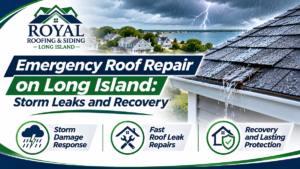
Emergency roof repair on Long Island after storms is a serious concern for homeowners because the area faces a mix of coastal weather, heavy rain, strong winds, hurricanes, nor’easters, winter storms, and sudden temperature changes. A roof may seem secure before a storm, then develop active leaks, lifted shingles, punctures, loose flashing, or drainage failures within hours.
Long Island homes are especially vulnerable because coastal winds can push rain beneath roofing materials, while falling branches and flying debris can damage shingles, flat roof membranes, gutters, and roof edges. Homes across Nassau County and Suffolk County may also deal with salt air, humid conditions, freeze-thaw cycles, and storm surge-related moisture that weaken roofing systems over time.
Emergency roof problems rarely stay limited to the roof. Water can quickly move into attic spaces, ceilings, insulation, drywall, electrical areas, and structural framing. What starts as a small leak during a storm can become mold growth, wood rot, stained ceilings, or the need for larger repairs if ignored.
Fast professional inspection and repair protect the home from further damage. Whether the issue involves shingles, flat roofing, flashing, gutters, or hidden leaks, homeowners should act quickly after storm damage appears.
What Is Considered an Emergency Roof Repair After a Storm in Long Island?
An emergency roof repair after a storm is any roofing issue that creates immediate risk to the home, occupants, structure, or interior. Not every missing shingle requires emergency service, but active leaks, open roof areas, punctures, exposed decking, and unsafe roof materials should be handled right away.
Emergency roof repair Long Island homeowners need often happens during or shortly after severe weather. Heavy rain may reveal a hidden leak. Strong wind may tear off shingles or loosen flashing. A fallen limb may puncture the roof. A clogged gutter may force water back under the roof edge. In these situations, waiting can make the damage worse.
Professional emergency roofing repair services Long Island homeowners rely on are designed to stabilize the roof, stop water intrusion, and prevent additional damage. Once the immediate risk is controlled, a full Roof Inspection can determine whether permanent Roof Repair, replacement, or additional restoration is needed.
Storm Damage That Requires Immediate Attention
Storm damage should be treated as urgent when the roof can no longer protect the home from water, debris, or structural risk. Some issues may need temporary protection first, followed by permanent repair when conditions are safe.
Storm damage that often requires immediate attention includes:
- Wind-torn, lifted, or missing shingles that expose underlayment or decking.
- Roof punctures from fallen branches, flying debris, or impact damage.
- Sudden active leaks during heavy rain or shortly after a storm.
- Loose flashing, ridge caps, or roof edge materials that allow water entry.
- Sagging roof areas, exposed decking, or damage that creates safety concerns.
These situations should be handled quickly because storms rarely cause only surface-level damage. Water can continue moving into hidden areas even after rainfall stops.
Why Post-Storm Roof Damage Should Never Be Delayed
Post-storm roof damage should never be delayed because moisture spreads fast. Water can soak insulation, stain ceilings, damage drywall, weaken wood framing, and create conditions for mold growth. If water reaches electrical fixtures or wiring, the risk becomes even more serious.
Delayed repairs can also increase the chance of needing full Roof Replacement. A small opening may become a larger leak after the next storm. Saturated insulation can reduce energy efficiency. Repeated water intrusion can damage the roof deck and interior finishes.
Immediate action helps reduce total repair costs. A professional can stop the leak, document the damage, and recommend the right long-term repair before the problem spreads through the home.
Most Common Storm-Related Roof Damage in Long Island Homes
Storm damage roof repair Long Island homeowners request most often involves wind, heavy rain, impact damage, and drainage problems. Some damage is easy to spot, like missing shingles or a branch on the roof. Other damage is hidden, such as lifted flashing, small punctures, cracked sealants, or water trapped below roofing materials.
Emergency roof leak repair Long Island homes need can happen on both pitched and flat roofs. Shingle roofs may lose protective pieces during strong winds. Flat roofs may develop membrane tears, ponding water, seam failure, or flashing leaks. Homes with older roofs are more vulnerable because materials may already be brittle, loose, or weakened by years of coastal weather.
After a storm, homeowners should look for both exterior and interior warning signs. Even if the roof looks normal from the ground, water stains, musty odors, and damp attic areas may point to storm-related damage.
Wind Damage to Shingles, Flashing, and Roof Edges
Wind damage is one of the most common reasons homeowners need emergency roof repair Long Island after storms. Strong gusts can lift shingles, loosen flashing, pull at ridge caps, and stress roof edges. Once roofing materials shift, wind-driven rain can enter underneath.
On Shingle Roofing systems, lifted or missing shingles expose the underlayment and increase leak risk. Flashing around chimneys, skylights, vents, and roof valleys can also separate during high winds. Roof edges are vulnerable because wind pressure is often strongest along the perimeter.
Gutter detachment is another common storm issue. When Gutters pull away from the home, water may overflow near roof edges, siding, windows, and foundations. Even if the shingles survive the storm, damaged drainage can still lead to water intrusion.
Heavy Rain Causing Sudden Roof Leaks
Heavy rain can turn a small roof weakness into an active leak. Long Island storms often bring fast, intense rainfall that overwhelms roof valleys, gutters, flat roof drains, and weak flashing points. Water may enter through cracked sealants, open seams, loose shingles, or poorly draining areas.
Ceiling stains, dripping water, damp attic insulation, and bubbling paint are common signs of emergency leaking roof situations. A leak may appear in one room but start at a roof opening several feet away. Water can travel along rafters, decking, and wall cavities before becoming visible.
Professional Leak Detection helps identify the true source instead of only patching the area above the stain. This is important because storm leaks can be misleading, especially when water travels through hidden paths.
Fallen Tree Limbs and Flying Debris Impact
Fallen tree limbs and flying debris can cause immediate roof emergencies. A heavy branch can puncture shingles, underlayment, decking, or flat roof membranes. Smaller debris can crack vents, damage flashing, tear roofing materials, or clog gutters and drains.
Impact damage should always be inspected, even if the roof does not leak right away. A puncture may be small but still allow water to enter during the next rain. Structural deck damage is especially serious because it can weaken the roof surface and create unsafe conditions.
Emergency repair may involve temporary covering, debris removal, leak control, and permanent repair once the roof is safe to access. Homeowners should avoid climbing onto a storm-damaged roof because hidden structural damage can make it dangerous.
Coastal Weather Risks That Trigger Emergency Roof Repair in Long Island
Long Island’s coastal climate creates roofing risks that homeowners in less exposed areas may not face as often. Strong wind, salt air, heavy rain, tropical storm remnants, nor’easters, snow, ice, and freeze-thaw cycles all affect roof performance. These conditions can weaken materials gradually, then cause sudden failure during a major storm.
24 hour emergency roof repair Long Island homeowners search for is often needed when storm damage happens outside normal business hours. Roof leaks rarely wait for a convenient time. Water can enter during the night, over a weekend, or while a storm is still active.
Coastal weather also creates repeated stress. A roof that was patched after one storm may fail again if underlying issues were not fixed. That is why emergency repair should be followed by a complete inspection and long-term repair plan.
Hurricanes, Nor’easters, and Severe Windstorms
Hurricanes, tropical systems, nor’easters, and severe windstorms can cause rapid roof failure. These storms bring a combination of wind pressure, heavy rainfall, flying debris, and drainage overload. Roofs near open water or exposed neighborhoods may experience stronger gusts and wind-driven rain.
Storms can lift shingles, loosen flashing, tear flat roof membranes, and damage roof edges. Even newer roofs can be affected if debris strikes the surface or if water backs up due to clogged drainage.
Seasonal storm patterns make preparation important. Before storm season, homeowners should schedule inspections, clear gutters, and address weak areas. After a major storm, another inspection can help catch damage before the next weather event.
Snow, Ice Dams, and Freeze-Thaw Damage
Winter storms can also create emergency roof problems. Snow adds weight to the roof, while ice dams can force water under shingles. When melting snow refreezes near roof edges, it can block proper drainage and cause water to back up into the roofing system.
Freeze-thaw cycles create hidden cracks and delayed leaks. Water enters small openings during warmer hours, then freezes and expands when temperatures drop. Over time, this can widen gaps around shingles, flashing, sealants, and flat roof seams.
A roof may not leak immediately after a winter storm. The leak may appear later when snow melts or rain follows freezing weather. This delayed damage is one reason winter roof issues should be inspected promptly.
Emergency Roof Repair for Residential Properties in Long Island
Residential emergency roof repair Long Island homeowners need depends on the roof type, storm severity, and condition of the existing roofing system. Single-family homes, townhouses, coastal cottages, and larger residential properties can all experience sudden storm damage. Each property requires a repair approach that matches the roofing material and the damage pattern.
Emergency roof repair services often begin with stopping water intrusion. This may involve temporary covering, sealing a leak point, securing loose materials, or clearing blocked drainage. Once the home is protected, the contractor can inspect the full roof and determine whether permanent repair, Roof Installation work, or replacement is needed.
For homeowners, speed matters. The sooner a roof is stabilized, the less likely the damage is to spread into ceilings, insulation, walls, and framing. Long Island weather can change quickly, so quick action after storm damage is the safest approach.
Single-Family Homes and Townhouses
Single-family homes and townhouses often experience storm damage on shingle roofs, roof valleys, chimneys, skylights, vents, and gutters. Wind can lift shingles or remove sections of roofing. Heavy rain can expose weak flashing. Tree limbs can damage one area of the roof while leaving the rest intact.
Same-day emergency repairs may be possible when the damage is localized and conditions are safe. The contractor may replace missing shingles, repair flashing, seal openings, or install temporary protection until a permanent repair can be completed.
For homeowners, the most important step is not ignoring early signs. A small stain after a storm can point to a roof opening that will worsen during the next rainfall.
Flat and Low-Slope Residential Roof Emergencies
Emergency flat roof repair Long Island homeowners need is often related to membrane damage, ponding water, clogged drains, or seam failure. Flat and low-slope roofs require careful drainage because water does not run off as quickly as it does on steep roofs.
Flat Roofing systems may include EPDM, TPO, modified bitumen, or other membrane materials. EPDM Roofing can be flexible and durable, but punctures, seam issues, and flashing problems still require fast repair. TPO Roofing can perform well when seams are properly welded, but storm debris or wind uplift can still damage the membrane.
Flat roof emergencies should be inspected quickly because water may travel beneath the membrane and appear inside far from the original opening.
When Storm Damage Leads to Roof Replacement Instead of Repair in Long Island
Some storm damage can be repaired. Other damage reveals that the roof is too old, too weak, or too compromised to keep patching. Roof replacement Long Island homeowners may need after storms becomes more likely when damage is widespread, when leaks recur, or when the roof has reached the end of its service life.
Emergency roofing repair may stop immediate water intrusion, but that does not always mean the roof is healthy. A temporary patch can protect the home short term while the contractor evaluates whether a larger replacement is needed. This is especially important when storm damage affects decking, multiple roof planes, flat roof insulation, or large sections of shingles.
Insurance considerations may also be involved. Homeowners should document damage, take photos when safe, save repair records, and work with a contractor who can provide clear inspection findings. The repair-versus-replacement decision should be based on roof condition, not guesswork.
| Storm Damage Condition | Emergency Repair May Be Enough | Roof Replacement May Be Better |
| A few missing shingles | Yes, if the roof is otherwise sound | No, unless shingles are brittle throughout |
| Small flashing leak | Yes, with proper repair | Yes, if flashing failure is widespread |
| One puncture from debris | Yes, if decking is not badly damaged | Yes, if structural damage is extensive |
| Repeated storm leaks | Temporary repair may help | Often, if the roof system is failing |
| Flat roof seam failure | Yes, if localized | Yes, if seams are failing across the roof |
| Old roof with major storm damage | Short-term stabilization only | Usually better for long-term protection |
Repair vs Replacement Decision Factors
The main decision factors include roof age, damage extent, leak history, material condition, and whether water has reached the roof deck or insulation. A newer roof with one storm-damaged area may only need repair. An older roof with several leak points may need replacement.
Insurance considerations can also influence timing. A contractor can provide inspection photos and repair documentation, but homeowners should contact their insurance provider for coverage questions.
A professional roof inspection helps determine whether Roof Repair is practical or whether replacement will save more money over time.
Benefits of Timely Roof Replacement After Severe Storms
Timely roof replacement after severe storm damage can provide stronger protection, better energy efficiency, and improved home value. A new roof can correct hidden storm damage, improve ventilation, upgrade underlayment, and strengthen vulnerable areas.
Replacement also reduces repeat emergency calls. If an aging roof keeps failing after storms, continued patching may cost more than a planned replacement.
For Long Island homeowners, a stronger roof system can provide peace of mind during hurricane season, winter storms, and heavy coastal rain. It also helps protect the interior investment of the home.
Choosing the Right Emergency Roofing Contractor in Long Island
Choosing the right contractor matters during a roofing emergency. Homeowners searching for emergency roof repairs near me Long Island need fast help, but speed should not come at the cost of quality. A good emergency roofer should respond quickly, inspect carefully, explain the damage, and provide a clear repair plan.
Emergency roof work should be done by licensed and insured professionals with storm response experience. The contractor should understand shingles, flat roofs, flashing, gutters, leak detection, and structural warning signs. For larger homes, mixed-use properties, or rental buildings, experience with Commercial Roofing systems can also be valuable.
Homeowners should avoid quick fixes from unqualified workers after storms. Poor repairs can trap moisture, void warranties, or make future leaks worse. A reliable contractor focuses on stopping immediate damage and protecting the home long term.
What to Look for in a 24/7 Emergency Roofing Company
A dependable emergency roofing company should combine fast response with professional workmanship. During storm season, homeowners need a contractor who can assess the roof safely and make practical recommendations.
Look for these qualities:
- Proper licensing, insurance, and local Long Island roofing experience.
- Ability to respond quickly to active leaks and storm damage.
- Experience with shingles, flat roofs, flashing, gutters, and roof edges.
- Clear inspection photos, written scopes, and repair explanations.
- Knowledge of temporary protection and permanent repair solutions.
The right contractor should help stabilize the home first, then explain the best long-term option.
Service Coverage Across Long Island
Long Island homeowners need local coverage because storms can affect different areas in different ways. Nassau County emergency roof repair may involve wind damage, heavy rain, roof edge leaks, and gutter failures in dense residential neighborhoods. Suffolk County emergency roof repair may include more coastal exposure, falling branches, storm surge moisture, and strong open-area winds.
A contractor familiar with both counties can better understand local roof types, weather exposure, and emergency access needs. This matters when homeowners need same-day inspections or urgent repairs after widespread storms.
Local experience also helps with practical scheduling, storm documentation, and repair planning based on Long Island’s climate and housing styles.
Why Immediate Emergency Roof Repair After Storms Is Critical
Immediate emergency roof repair after storms is critical because water damage spreads quickly. A roof opening may begin as a small leak, but water can move into insulation, ceilings, walls, flooring, and electrical areas before the homeowner realizes how serious it is.
Fast repair reduces secondary damage. It can prevent mold growth, protect belongings, reduce drywall and insulation repairs, and limit structural deterioration. It also helps homeowners avoid repeated leaks when another storm arrives.
24 hour emergency roof repair is especially important when leaks happen overnight, during weekends, or while storms continue. The goal is to stop water intrusion, protect occupants, and stabilize the home until permanent repairs can be completed.
For Long Island homes, acting quickly is not only about convenience. It protects safety, property value, and the long-term condition of the roof system.
Conclusion: Don’t Wait After the Storm — Protect Your Long Island Home
Storm damage can turn into a roofing emergency fast. Wind-torn shingles, loose flashing, heavy rain leaks, fallen branches, punctured membranes, clogged gutters, ice damage, and flat roof seam failures are all common reasons homeowners need emergency roof repair Long Island after storms.
The most important step is to act quickly. A post-storm inspection can identify damage before water spreads into ceilings, walls, insulation, and framing. Professional emergency repair helps protect your home, reduce costs, and prevent a small leak from becoming a major structural problem.
For trusted service, contact Royal Roofing & Siding – Long Island at 516-252-3001. Visit 70 Sunrise Hwy Suite 500, Valley Stream, NY 11581 for emergency roof repair, storm inspections, leak detection, flat roof repairs, shingle repairs, and replacement planning.
FAQs – Emergency Roof Repair After Storms in Long Island
How soon should I schedule emergency roof repair after a storm in Long Island?
You should schedule emergency roof repair as soon as you notice active leaks, missing shingles, fallen debris, loose flashing, ceiling stains, or water intrusion. Storm damage can spread quickly, especially during repeated rain. Fast inspection and repair help prevent mold, insulation damage, drywall repairs, and structural issues.
Do emergency roofing contractors in Long Island offer 24/7 services?
Many emergency roofing contractors provide urgent storm response, including after-hours service for active leaks and serious roof damage. Availability can vary by company and weather conditions. If water is entering your home, call immediately so the roof can be stabilized and inspected as soon as possible.
Can storm-damaged roof leaks be repaired the same day?
Some storm-damaged roof leaks can be repaired the same day if the damage is localized and conditions are safe. In severe cases, a contractor may first install temporary protection, then return for permanent repairs. A full inspection helps determine the right repair timeline.
Is emergency flat roof repair different after storm damage?
Yes, emergency flat roof repair often involves checking membranes, seams, drains, flashing, ponding water, and punctures. Water can travel under flat roof materials, so the leak source may not be obvious. Professional inspection is important before patching the damaged area.
Will storm-related emergency roof repair be covered by insurance?
Storm-related roof repair may be covered depending on your policy, damage cause, roof condition, and deductible. Homeowners should document damage with photos, keep repair records, and contact their insurance provider. A roofing inspection report can help support the claim process.