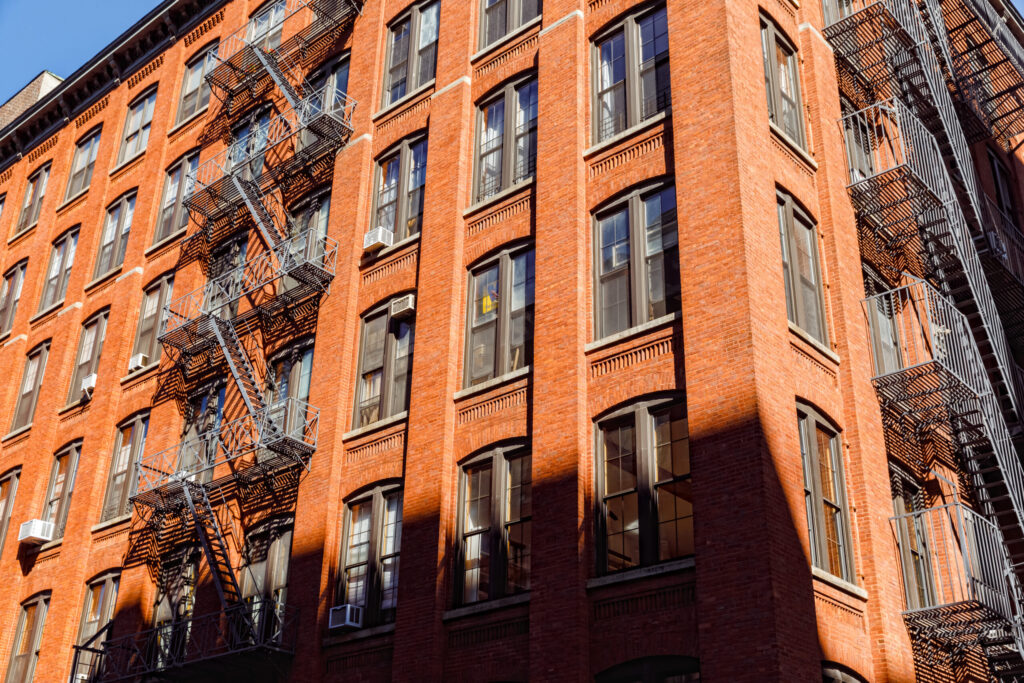
Moisture problems Brooklyn row houses face often begin where the roofline, gutters, and masonry meet. These older attached homes are built with durable materials, but their tight spacing, shared walls, flat roof edges, and historic brickwork can trap water in places homeowners do not notice right away.
Brooklyn row houses were designed for dense city living. Many have parapet walls, brick facades, older mortar, narrow drainage paths, and roof systems that need careful water control. When one part fails, moisture can move into another part quickly.
A clogged gutter can soak brick. A roofline leak can travel behind plaster. Failed mortar can allow water into the wall. These problems are connected, which is why repeated patchwork rarely solves the full issue.
This guide explains the causes, warning signs, and prevention steps behind moisture damage. It is not about quick fixes. It is about understanding how exterior systems work together so Brooklyn homeowners can protect their property before leaks become structural repairs.
Why Brooklyn Row Houses Are Especially Vulnerable to Moisture Problems
Moisture problems Brooklyn row houses experience are often tied to age, construction style, and local weather. Many row houses were built before modern moisture barriers, ventilation methods, and roof drainage systems became standard.
These homes often rely on older brick, lime mortar, flat roof assemblies, parapet walls, and shared side walls. When maintained properly, these materials can last for decades. When neglected, they can hold moisture and slowly weaken.
Brooklyn’s dense streets also limit airflow around exterior walls. Row houses may not dry as quickly as detached homes because one or both side walls are shared with neighboring structures.
Aging Building Materials and Historic Construction
Older row houses often include brick, brownstone, lime mortar, wood framing, and roofing layers that have changed over time. Some homes have had many repairs, roof coatings, patches, and gutter adjustments added through the years.
Historic construction did not always include the same moisture barriers used in newer buildings. Water management depended heavily on sound masonry, proper roof drainage, and breathable materials.
When mortar begins to fail, brick absorbs more water. When roofing edges weaken, water can enter behind walls. When old repairs trap moisture, damage can spread faster.
Professional roofing and masonry inspections help identify whether moisture is entering from the roof, wall, flashing, gutter, or a combination of several areas.
Shared Walls and Limited Airflow Between Buildings
Brooklyn row houses often share party walls with neighboring homes. These shared walls can reduce drying potential because air does not move around the building as freely.
Moisture can become trapped in roofline areas, behind parapets, near chimneys, and inside wall cavities. If the exterior wall stays damp, interior symptoms may appear later as stains, odors, or peeling paint.
Limited airflow also makes hidden moisture harder to detect. A wall may look dry from the outside while moisture remains behind plaster or inside brick joints.
This is one reason regular exterior maintenance is important. Small moisture paths should be corrected before they move deeper into the structure.
Brooklyn Climate and Seasonal Weather Stress
Brooklyn weather puts row houses through heavy rain, snow, ice, summer heat, wind, and freeze thaw cycles. Each season affects rooflines, gutters, and masonry differently.
Rain exposes open joints and flashing gaps. Winter freezing expands trapped water. Summer heat can stress roof membranes and sealants. Storms can loosen gutters, coping stones, and roof edge details.
Seasonal weather is especially hard on older brick and mortar. Once small cracks open, water can enter and make the next season’s damage worse.
A strong maintenance plan should include spring inspections, fall drainage cleaning, and storm checks after heavy weather.
Roofline Design Issues That Lead to Moisture Intrusion in Brooklyn
Roofline leaks Brooklyn homeowners notice often start at transitions. The area where the roof meets parapet walls, chimneys, skylights, vents, or masonry is one of the most vulnerable places on a row house.
Flat and low slope roofs need reliable drainage and proper flashing. If water sits near roof edges or travels behind flashing, it can move into ceilings, walls, and masonry before the leak becomes visible indoors.
Moisture around rooflines should never be ignored. Even a small stain on an upper wall can point to a leak that has been active behind the surface for some time.
Parapet Walls and Flat Roof Transitions
Parapet walls are common on Brooklyn row houses. They rise above the roof edge and help protect the roofline, but they also create common leak points when masonry or flashing fails.
The connection between a flat roofing system and a parapet wall must stay sealed. If flashing loosens, coping stones crack, or mortar joints open, rain can enter from above or behind the roof edge.
Flat roof transitions need extra care because water does not run off as quickly as it does on steep roofs. Even small openings can allow repeated moisture entry.
Homes with EPDM or TPO roof systems also need proper edge detailing. The membrane, flashing, and parapet must work together to keep water out.
Poor Flashing Installation and Deterioration
Flashing protects roof edges, chimneys, walls, vents, and other transitions. When flashing is installed poorly or deteriorates with age, water can move behind the roof surface.
Aging metal flashing may rust, separate, lift, or pull away from masonry. Sealants around flashing can also dry out, crack, or lose adhesion.
Once water travels behind flashing, it may not drip straight down. It can move along framing, behind plaster, or through masonry before showing indoors.
This is why Leak Detection and careful roofline inspection are important. The visible stain is often not directly below the entry point.
Ponding Water Near Roof Edges
Ponding water near roof edges is a common flat roof concern. It may happen because of poor slope, blocked drains, clogged gutters, sagging roof areas, or debris buildup.
Standing water keeps roof materials wet longer than intended. Over time, this can weaken seams, coatings, flashing, and roof edge details.
Long term saturation can also affect nearby masonry. If water repeatedly collects near parapets, it may seep into mortar joints and brick surfaces.
If ponding appears often, homeowners should schedule a professional roof inspection. The solution may involve drainage correction, roof repair, or in older cases, roof replacement planning.
How Gutter and Drainage Problems Cause Moisture Damage in Brooklyn
Gutter drainage Brooklyn row houses need is more important than many homeowners realize. Gutters are not just accessories. They move water away from roofs, facades, masonry, foundations, stoops, and entry areas.
When gutters clog, sag, leak, or drain poorly, water is redirected onto places that were never meant to stay wet. Brick walls, mortar joints, window surrounds, and roof edges can all suffer.
Poor gutter performance often shows up as masonry staining, peeling paint, basement dampness, or interior leaks near upper floors. The source may be outside, even when the damage appears indoors.
Clogged Gutters and Downspouts
Clogged gutters and downspouts are one of the easiest ways moisture damage begins. Leaves, roof granules, tree debris, nesting material, and city dust can block water flow.
When gutters overflow, water may pour directly onto brick walls or roof edges. This repeated soaking can weaken mortar joints and stain the facade.
Downspouts also need attention. A clean gutter is not enough if the downspout is blocked or disconnected.
Professional gutters maintenance should include cleaning, flushing, checking pitch, and confirming water is moving away from the building.
Improper Gutter Pitch and Drainage Flow
Gutters need proper slope to move water toward downspouts. If the pitch is wrong, water sits inside the gutter and adds weight to the system.
Standing water can rust metal gutters, loosen fasteners, and increase overflow during storms. In winter, trapped water can freeze and create ice problems.
Poor drainage flow may also send water toward masonry instead of away from it. This can worsen exterior staining and long term mortar decay.
Correcting gutter pitch is often a small step that prevents larger moisture problems around rooflines and facades.
Water Runoff Damage to Facades and Foundations
Water runoff can damage both upper and lower parts of a row house. At the top, overflow can soak brick, parapets, and roof edges. At the bottom, splash back can wet foundation areas, stoops, and basement walls.
Repeated splash back slowly erodes mortar joints and leaves staining near the lower facade. In some cases, moisture can contribute to basement dampness or interior odors.
Water should be directed away from the wall whenever possible. Downspouts, extensions, drains, and proper grading all matter.
If runoff has already damaged masonry, the repair should address both the wall and the water source.
Masonry Moisture Damage in Brooklyn Row Houses
Masonry moisture damage Brooklyn homes develop often starts slowly. Brick and mortar can absorb water, release it, and continue performing well when the wall is healthy. Problems begin when moisture enters too often or cannot dry out.
Older Brooklyn row houses are especially vulnerable when mortar joints fail, brick faces deteriorate, or previous repairs trap moisture inside the wall. Once moisture moves deeper, damage can appear indoors.
Masonry should be allowed to breathe while still being protected from water entry. That balance is why repair methods matter.
Brick Porosity and Water Absorption
Brick is naturally porous. It can absorb a limited amount of moisture and dry out when conditions are right. Older brick may absorb more water if its surface has softened or weathered.
When brick stays damp for long periods, it becomes more vulnerable to cracking, staining, and spalling. Spalling happens when the brick face flakes or breaks away.
Water absorption is often worse near rooflines, parapets, window sills, and gutter overflow areas. These sections receive more moisture than open wall areas.
Professional inspection can determine whether brick damage is surface level or part of deeper wall deterioration.
Mortar Joint Deterioration and Cracking
Mortar joints are the first line of defense between bricks. When mortar cracks, recedes, or turns sandy, water can enter through the joints.
Failed pointing allows moisture to move behind the wall surface. During winter, trapped water can freeze and expand, creating larger cracks.
This cycle can continue until bricks loosen or interior dampness appears. Repointing may be needed before the wall loses more strength.
The correct mortar is important. Older row houses often need compatible mortar that works with historic brick rather than hard cement that traps moisture.
Efflorescence, Spalling, and Interior Dampness
Efflorescence appears as white salt deposits on brick or masonry. It often means water has moved through the wall and carried salts to the surface.
Spalling brick faces are another warning sign. Once the face breaks away, the inner brick is more exposed to weather and deteriorates faster.
Interior dampness may appear as peeling paint, bubbling plaster, musty odors, or water stains. These signs can be linked to masonry, rooflines, gutters, or all three.
Cosmetic fixes do not solve active moisture movement. The exterior source must be found and corrected first.
Warning Signs of Moisture Problems Brooklyn Homeowners Often Miss
Moisture problems Brooklyn row houses develop can stay hidden for months. Homeowners may repaint a wall, clean a stain, or patch a ceiling without realizing the source is still active outside.
Small warning signs deserve attention because moisture often travels. A leak near the roofline can show up lower on a wall. A gutter issue can look like a masonry problem. A flashing gap can create interior stains far from the entry point.
The best approach is to connect indoor and outdoor symptoms instead of treating each sign separately.
Interior Stains, Mold Odors, and Peeling Paint
Interior stains are often early signs of moisture intrusion. Brown marks, yellow rings, bubbling paint, or damp plaster near upper walls should be checked.
Mold odors may appear before visible mold. Older row houses can hide moisture behind plaster, wood trim, ceiling cavities, and built in features.
Peeling paint is often treated as a surface problem, but it may be caused by moisture pushing from behind the wall.
If stains return after repainting, the exterior source has not been fixed. A professional inspection should check the roofline, gutters, flashing, and masonry.
Exterior Cracks and Discoloration
Exterior cracks may appear in brick, mortar joints, stucco, parapets, or around windows. Thin cracks can still allow water entry during wind driven rain.
Discoloration can also reveal moisture problems. Dark staining, green growth, white salt deposits, or streaks below gutters may show where water is moving.
These signs should be inspected before the damage spreads. Waiting can allow moisture to reach deeper wall areas.
Regular exterior maintenance Brooklyn homes need should include checking masonry, roof edges, gutters, downspouts, and areas below overflow points.
Structural Red Flags Over Time
Long term moisture can weaken building materials. Wood rot near rooflines, soft sheathing, loose masonry, bowed walls, and sagging gutter lines are more serious warning signs.
Moisture damage can also affect roof decking and framing. If roof materials stay wet, they may lose strength over time.
Structural red flags usually mean the moisture problem has been active for a while. At that point, simple patching may not be enough.
A contractor may need to evaluate both exterior repair and hidden damage inside the roof or wall assembly.
Why Delayed Exterior Maintenance Makes Moisture Problems Worse in Brooklyn
Exterior maintenance Brooklyn homes need should not wait until a leak becomes obvious. Small problems can spread across roof, gutter, and masonry systems because these areas work together.
A loose flashing detail can soak a parapet. A clogged gutter can damage mortar. Open mortar joints can allow water into interior walls. Once moisture begins moving through multiple systems, repairs become more expensive.
| Maintenance Approach | What Usually Happens | Long Term Result |
| Proactive exterior maintenance | Small roofline, gutter, and masonry issues are found early | Lower repair risk and better cost control |
| Delayed repairs | Minor leaks and drainage problems continue through seasons | Moisture spreads into walls, ceilings, and masonry |
| Emergency restoration | Work begins after visible damage or active leaks appear | Higher cost, more disruption, and possible hidden damage |
Preventive inspections are usually more effective than repeated patchwork. They help homeowners find the source instead of only treating the symptom.
Preventing Moisture Problems in Brooklyn Row Houses
Preventing moisture problems starts with consistent exterior care. Rooflines, gutters, and masonry should be inspected together because failure in one area often affects the others.
Roofline leaks Brooklyn homeowners want to avoid usually come from neglected flashing, open parapet joints, ponding water, or aging roof edges. Gutter drainage Brooklyn row houses rely on should also be cleaned and checked before heavy rain seasons.
A practical prevention plan does not need to be complicated. It needs to be consistent.
Routine Roofline and Flashing Inspections
Roofline inspections should check parapets, coping stones, flashing, roof edges, seams, vents, and drainage paths. These areas are common moisture entry points.
At least one professional inspection each year is helpful for older row houses. Additional inspections are smart after heavy storms or repeated leaks.
Early detection can prevent interior damage. A small flashing repair today may prevent ceiling repair later.
Homes with aging shingle roofing sections or flat roof areas should be inspected carefully because different systems fail in different ways.
Gutter Cleaning and Drainage Optimization
Gutter cleaning should be done seasonally, especially before winter and after leaves or storm debris build up. Downspouts should be flushed and checked for proper discharge.
Drainage optimization means water should move away from masonry, stoops, foundations, and shared walls. If water spills down the facade, the gutter system is not doing its job.
Sagging gutters, disconnected downspouts, and poor pitch should be repaired quickly. These small defects often cause larger moisture problems.
If storms have damaged gutters or roof edges, storm damage roof repair may also be needed.
Masonry Maintenance and Moisture Control
Masonry maintenance includes checking mortar joints, brick faces, parapets, window surrounds, and areas near roof runoff. Small gaps should be repaired before water enters deeply.
Repointing can help stop moisture entry when mortar joints are failing. However, the mortar must be compatible with the original brick.
Sealing should be handled carefully. Masonry needs to breathe, and the wrong coating can trap moisture inside the wall.
A good moisture control plan balances repair, drainage, ventilation, and appropriate material use.
Conclusion: Protecting Brooklyn Row Houses from Long Term Moisture Damage
Moisture problems Brooklyn row houses face usually start around rooflines, gutters, and masonry. These systems are connected, so a failure in one area can quickly affect the others.
A roofline leak can soak the wall. A clogged gutter can damage brick and mortar. Failed masonry can allow moisture into interior rooms. Early exterior maintenance helps prevent these problems from becoming structural repairs.
Proactive inspections are more effective than repeated patchwork fixes. They help identify the source, protect historic materials, and reduce the risk of mold, ceiling damage, roof deterioration, and expensive restoration.
For trusted local support, contact Royal Roofing & Siding Brooklyn at 718-536-2667. Visit 2380 Ralph Ave, Brooklyn, NY 11234 for roofing, gutter, masonry, and moisture related exterior repair services.
FAQs: Moisture Problems in Brooklyn Row Houses
Why are moisture problems common in Brooklyn row houses?
Moisture problems are common because many Brooklyn row houses have older brick, lime mortar, flat roof edges, parapet walls, shared walls, and limited airflow. When rooflines, gutters, or masonry fail, water can enter and remain hidden inside walls or ceilings.
How do roofline leaks start in older Brooklyn homes?
Roofline leaks often start around parapet walls, flashing, coping stones, roof edges, vents, or flat roof transitions. Aging materials, ponding water, poor drainage, and freeze thaw movement can open small gaps that allow water to travel behind walls.
Can clogged gutters really cause masonry damage?
Yes, clogged gutters can overflow and direct water onto brick facades, mortar joints, parapets, and foundations. Repeated soaking can weaken mortar, stain brick, cause spalling, and increase moisture problems inside older Brooklyn row houses.
What are early signs of masonry moisture damage?
Early signs include white salt deposits, flaking brick faces, cracked mortar joints, dark staining, damp interior walls, peeling paint, and musty odors. These signs often mean water is moving through the masonry or entering through nearby roofline details.
How often should exterior inspections be done in Brooklyn?
Older Brooklyn row houses should usually have exterior inspections at least once a year. Additional inspections are helpful after heavy storms, winter freeze thaw cycles, roof leaks, gutter overflow, or visible masonry cracking.
Is repointing enough to stop brick moisture issues?
Repointing can help when failing mortar joints are the main source of water entry. It may not be enough if the roofline, flashing, gutters, brick faces, or parapet walls are also damaged. A full inspection should identify the real moisture source.
Can proper exterior maintenance prevent interior mold problems?
Proper exterior maintenance can reduce the risk of interior mold by stopping water before it reaches walls, ceilings, and hidden cavities. Keeping rooflines sealed, gutters clear, and masonry joints repaired helps limit damp conditions where mold can develop.