Quick Answer: A Manhattan roofing contractor needs proven experience with the exact property involved, current credentials and insurance, a detailed roof-specific scope, clear access planning and defined warranty terms. Co-ops and condos also need bid leveling, controlled change orders and complete project documentation.
Hiring a roofing contractor in Manhattan involves far more than comparing three totals. Co-op and condo buildings add internal drains, rooftop equipment, terraces, occupied apartments and board approvals. Townhouses bring parapets, party walls, chimneys and historic-building concerns. Commercial and mixed-use properties add storefronts, tenants and tighter scheduling constraints.
The contractor’s value becomes clear before construction begins. A careful inspection, comparable Manhattan experience, clear contract language and well-defined responsibilities give owners a stronger basis for selecting a company than price alone.
What Manhattan Property Owners Need to Compare
| Evaluation area | What to verify | Why it matters |
| Comparable experience | Similar Manhattan property and roof type | Confirms relevant project experience |
| Inspection quality | Drains, membrane, parapets, equipment and access | Shows whether the bid reflects actual conditions |
| Licensing and insurance | Current credentials and project coverage | Reduces contractual and construction risk |
| Scope detail | Tear-off, materials, flashing, drainage and exclusions | Makes competing bids comparable |
| Building operations | Access, residents, tenants and staging | Limits disruption during construction |
| Change-order method | Pricing for concealed conditions | Keeps unexpected work controlled |
| Warranty | Workmanship, manufacturer terms and exclusions | Defines post-project responsibility |
| Closeout | Photos, warranties and applicable filing records | Gives the owner a permanent roof history |
Start With Comparable Manhattan Roofing Experience
The contractor’s experience needs to match the actual property.
A company focused mainly on detached shingle roofs does not automatically bring the right background for an Upper West Side co-op, a Chelsea condominium terrace or a Midtown mixed-use building.
For a co-op or condo, useful experience includes low-slope membrane systems, internal drains, bulkheads, mechanical equipment, occupied apartments and controlled roof access.
Buildings with rooftop terraces also need a contractor familiar with removing and restoring pavers, protecting finished surfaces and reaching concealed waterproofing without creating unnecessary demolition.
A few truly comparable Manhattan projects provide more useful evidence than dozens of unrelated roofing photographs.
Judge the Inspection Before the Proposal
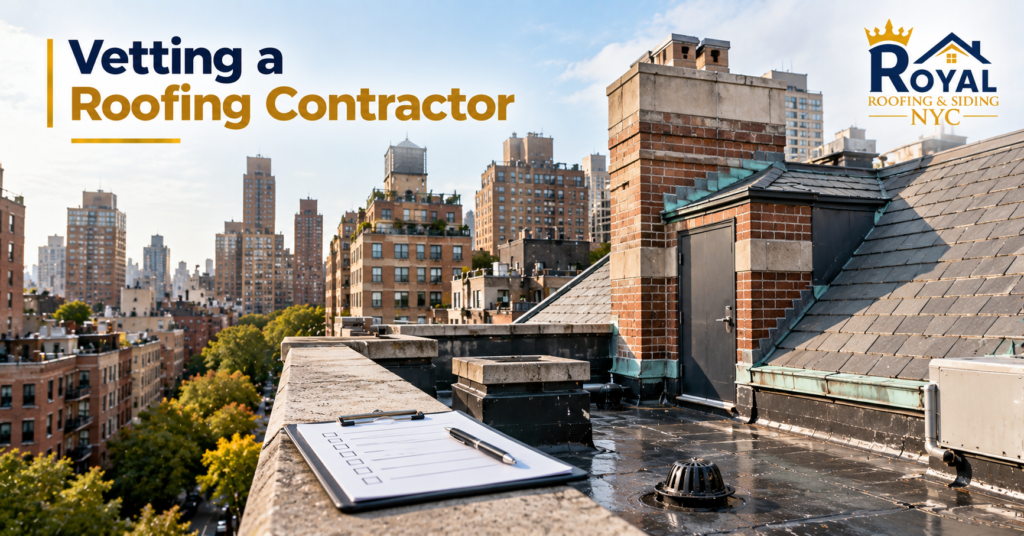
A dependable bid begins with a detailed roof inspection.
The contractor needs to review the membrane along with drains, ponding areas, parapets, coping, equipment curbs, bulkheads, roof hatches and previous repairs.
Terrace buildings also require attention to thresholds, pavers, planters, drainage and concealed membrane zones.
Interior information strengthens the diagnosis. Previous leak records, photographs and repair invoices help connect roof conditions with top-floor apartments or other occupied spaces below.
A proposal based only on roof square footage leaves too many Manhattan-specific conditions undefined.
Require a Scope That Explains the Work Clearly
“Replace existing roof” is not enough for a Manhattan project.
The proposal needs to identify the roofing system, tear-off extent, insulation, flashing, drainage work, parapet interfaces, equipment penetrations and temporary protection.
It also needs clear exclusions.
If masonry repairs, terrace restoration, mechanical coordination or extensive deck replacement sit outside the base price, the owner needs that information before awarding the contract.
Clear scope language also gives the managing agent, board, owner and contractor the same reference point once construction begins.
Level the Bids Before Comparing Price
Three roofing contractors rarely submit proposals in the same format.
One includes tapered insulation while another excludes it. One rebuilds drain flashing while another reuses existing details. One includes terrace restoration while another prices only the exposed membrane.
The owner needs to compare scope line by line.
| Scope item | Contractor A | Contractor B | Contractor C |
| Tear-off | Included / Excluded | Included / Excluded | Included / Excluded |
| Deck repair pricing | Unit rate / allowance | Unit rate / allowance | Unit rate / allowance |
| Insulation | Specification | Specification | Specification |
| Drain work | Defined scope | Defined scope | Defined scope |
| Parapet flashing | Defined scope | Defined scope | Defined scope |
| Equipment curbs | Defined scope | Defined scope | Defined scope |
| Terrace restoration | Defined scope | Defined scope | Defined scope |
| Temporary waterproofing | Included / Excluded | Included / Excluded | Included / Excluded |
| Warranty | Term and type | Term and type | Term and type |
Concealed conditions also belong in this comparison. The contract needs an agreed pricing method for deteriorated deck, wet insulation or damaged substrate discovered during tear-off.
Photographs, measured quantities and written authorization give the owner control over additional work without stopping every legitimate field decision.
Once the scopes line up, the totals become meaningful.
Verify Current NYC Contractor Credentials
For covered residential home-improvement work, owners and boards check the contractor through the NYC Department of Consumer and Worker Protection license search.
The licensed entity needs to match the business signing the roofing agreement.
Do not rely on a sales brochure, vehicle logo or old certificate. Verify the company that actually enters the contract and performs the work.
Where DOB permits apply, the contractor information used for filing also needs to be current.
Review Insurance as Part of the Contract
Insurance review needs more than receiving one certificate.
The NYC Department of Buildings contractor permit and insurance requirements list general liability coverage of at least $1 million per occurrence for licensed contractors registered with DOB, along with workers’ compensation and disability coverage as required.
The insurance documents need to match the contracting entity and remain active for the project period.
Many Manhattan co-op and condo contracts also impose additional building-specific insurance requirements through the managing agent, attorney or insurance adviser. Those requirements often include naming the ownership entity and managing agent as additional insureds.
Resolve those conditions before mobilization so insurance paperwork does not delay access to the roof.
Define Who Handles Permits and Professional Coordination
The contract needs to state who determines and handles required permits or filings.
A localized repair, complete replacement, structural modification and rooftop alteration do not carry the same administrative scope.
Larger Manhattan projects also involve architects, engineers or other professionals where the work requires their participation.
Owners need to know who coordinates those parties, who pays the related fees and what documentation arrives at project closeout.
Vague language such as “permits extra” leaves too much responsibility unresolved.
Plan Building Operations, Access and Resident Protection Together
Manhattan roofing happens inside an active building environment.
For a co-op or condo, contractors often use service entrances, freight elevators, stair bulkheads and common corridors to reach the roof. Top-floor apartments remain occupied below the work, while residents continue using entrances and shared spaces.
The contractor needs a defined route for materials, debris and workers. Elevator interiors, corridors and finished common areas also need protection where they form part of that route.
Buildings with retail or office tenants add another operational layer. Deliveries, storefront entrances and customer traffic continue while roofing work takes place overhead.
The building manager and contractor need one coordinated plan covering access hours, interior protection, temporary waterproofing, tenant communication and areas restricted during active work.
Ask How Rooftop Equipment Is Integrated Into the Scope
Manhattan co-op, condo and commercial roofs often contain extensive mechanical equipment.
HVAC units, exhaust systems, pipes, conduits, hatches and service supports all interrupt the membrane.
The proposal needs to state how each curb and penetration gets incorporated into the new roofing system.
Where equipment needs lifting, temporary disconnection or work from another trade, the responsible party needs to be identified before construction.
A roofing contractor does not need to perform every mechanical task. The contract does need to define where roofing responsibility ends and another trade begins.
Terrace Buildings Need a Separate Restoration Scope
Terraces deserve their own bid line because the finished surface sits above the waterproofing.
Pavers, decking, planters and related features often need removal before membrane work begins.
The scope needs to identify who removes them, where reusable materials are stored, what returns to service and how damaged or non-reusable finishes are handled.
Thresholds, railing details and drains also need to remain part of the roofing review.
Defining terrace restoration before award prevents the board or owner from discovering halfway through construction that rebuilding the finished rooftop space was excluded.
Townhouse Owners Need Different Contractor Experience
A Manhattan townhouse brings a different set of contractor questions.
Upper East Side, Upper West Side, Harlem and Greenwich Village properties often combine compact roofs with parapets, party walls, chimneys, skylights and older masonry.
A townhouse contractor needs experience separating membrane failure from coping, mortar or chimney problems. Neighbor access also matters where party walls or adjoining roof elevations form part of the repair area.
Many townhouse blocks sit within LPC-designated historic districts, so visible alterations involving rooflines, cornices, skylights or street-facing masonry also need the applicable Landmarks review.
Townhouse owners therefore benefit from contractors who understand both the roofing system and the building context around it.
Commercial and Mixed-Use Buildings Need Operational Experience
Commercial and mixed-use Manhattan properties bring another set of constraints.
Restaurants, stores, offices and residential tenants often remain active beneath the roof work.
The contractor needs experience scheduling disruptive work around those uses, protecting storefront entrances and controlling debris movement through busy parts of the building.
Some properties also require after-hours or restricted-hour coordination for deliveries, interior access or particularly disruptive phases of the project.
A technically strong roofing proposal still creates problems when the contractor has not planned how the project works around the building’s daily operations.
Warranty and Closeout Documents
A longer warranty does not automatically provide better protection.
Owners need to distinguish between manufacturer system coverage and contractor workmanship coverage, then review exclusions, maintenance obligations and claim procedures. The contract also needs to identify who responds first if a leak appears after completion.
Project closeout needs to include final warranties, approved change orders, photographs, product information and copies of applicable permit or filing records.
For terraces and other concealed membrane areas, keep photographs taken before pavers or finished surfaces return.
These documents form the permanent roof record and give future boards, managers and contractors a clear view of what was installed and how it is covered.
Check References for Project Management
References need to show more than whether the finished roof stayed dry.
Ask comparable Manhattan clients about communication, schedule control, protection of occupied areas, change orders, final invoicing and warranty response. A technically strong roof still creates unnecessary problems when project administration breaks down.
Manhattan Roofing Contractor Red Flags
| Red flag | Why it matters |
| Bid issued without a detailed inspection | Important roof conditions remain unverified |
| No comparable Manhattan projects | Building-specific experience remains unclear |
| Vague scope with major exclusions undefined | Competing bids are impossible to compare properly |
| Insurance or licensing records do not match the contractor | Contract responsibility becomes unclear |
| No access or building-operations plan | Project disruption has not been addressed |
| No agreed change-order method | Concealed conditions create uncontrolled cost risk |
Choose the Contractor Who Makes the Project Clear
The strongest Manhattan roofing contractor is not simply the lowest bidder.
A good selection process compares relevant experience, inspection quality, scope detail, licensing, insurance, access planning, change-order control and warranty terms.
Co-op and condo boards need especially strong project documentation because roofing decisions affect shared property and multiple residents. Townhouse owners need careful attention to masonry and neighboring buildings, while mixed-use owners need contractors who understand active commercial operations.
For professional roof inspection, replacement planning or a detailed roofing proposal in Manhattan, contact Royal Roofing & Siding NYC at 212-457-1331, 605 W 42nd St PH1A, New York, NY 10036.
FAQs: Vetting a Roofing Contractor in Manhattan
What experience matters most when hiring a Manhattan roofing contractor?
Look for completed projects involving a similar building type, roof system, access arrangement and occupancy. Co-ops, condos, townhouses and mixed-use properties each create different roofing and project-management requirements.
How does a Manhattan co-op or condo board compare roofing bids fairly?
Compare tear-off, insulation, deck pricing, drainage, flashing, equipment work, terrace restoration, temporary waterproofing, warranties and exclusions before comparing the final totals.
How do Manhattan property owners verify a roofing contractor’s license?
For covered residential home-improvement work, owners verify the business through the NYC Department of Consumer and Worker Protection license search. The licensed entity needs to match the company signing the roofing agreement.
What insurance needs review before a Manhattan roofing project?
NYC DOB lists general liability insurance of at least $1 million per occurrence for licensed contractors registered with the Department, along with workers’ compensation and disability coverage as required. Building-specific contracts often add further insurance requirements.
What needs to be defined for hidden roof-deck damage?
The contract needs an agreed pricing and authorization method for concealed deck, insulation or substrate repairs. Photographs, measured quantities and written approval keep additional work controlled.
What matters when hiring a roofing contractor for a Manhattan townhouse?
Look for experience with parapets, party walls, chimneys, skylights, older masonry, neighbor access and any historic-district requirements affecting visible exterior work.
What belongs in the roof project closeout package?
Keep final warranties, approved change orders, photographs, product information and copies of applicable permits or filing records. Concealed terrace and membrane details also need photographic documentation before finishes return.