Quick Answer: Signs of roof damage in Manhattan include recurring top-floor leaks, ponding around internal drains, loose membrane seams, deteriorated parapets, terrace leaks, damaged equipment flashing and moisture around skylights or bulkheads. High-rises, co-ops, condos and townhouses develop different warning signs because their roofs use different drainage, access and perimeter systems.
A roof problem in Manhattan rarely announces itself through one obvious hole in the membrane. Water often travels through insulation, deck assemblies, masonry or terrace layers before it appears inside a penthouse, top-floor apartment or stair bulkhead.
The warning signs also change with the building. A Midtown high-rise brings equipment, internal drains and exposed roof perimeters into the inspection. An Upper East Side townhouse places more attention on parapets, party walls, chimneys and skylights. Chelsea condos add terraces and rooftop additions, while large Upper West Side co-ops often combine broad low-slope roofs with several drainage and mechanical zones.
Recognizing the pattern behind the damage helps owners address the actual source instead of repeating surface repairs.
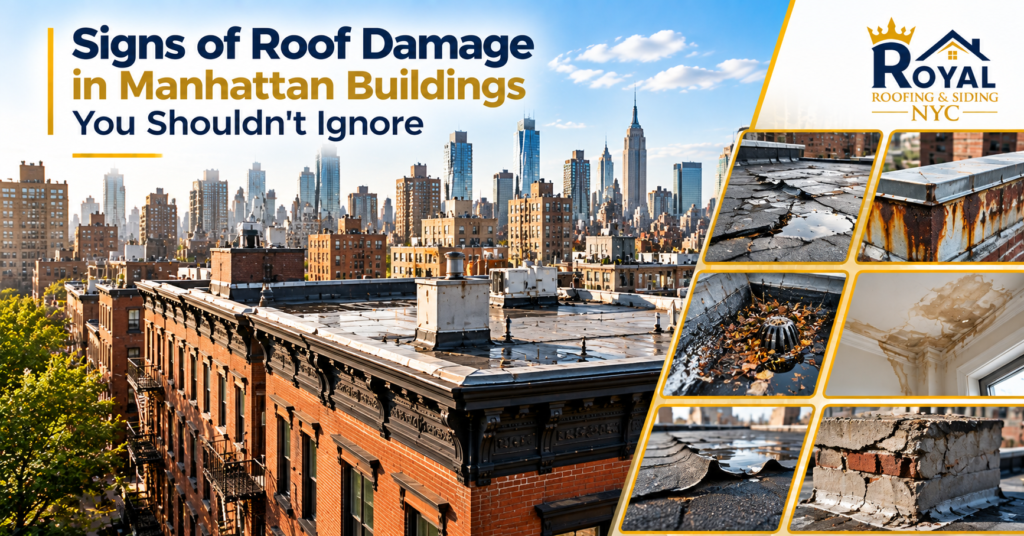
Manhattan Roof Damage Signs at a Glance
| Warning sign | Common Manhattan setting | Likely roof area to inspect |
| Recurring top-floor leak | Co-op, condo, townhouse | Drain, parapet, flashing, seam or penetration |
| Ponding after rainfall | Large low-slope co-op or high-rise | Internal drain, slope, insulation or deck |
| Opening membrane repair | Flat roof | Seam, previous patch or movement zone |
| Cracked parapet or loose coping | Townhouse, pre-war multifamily building | Masonry, coping and roof-to-wall flashing |
| Leak below rooftop terrace | Condo, penthouse, co-op | Threshold, drain, parapet or concealed membrane |
| Damage around HVAC equipment | High-rise, co-op, commercial building | Equipment curb and membrane penetration |
| Moisture around skylight or hatch | Townhouse or rooftop addition | Flashing, curb or surrounding membrane |
| Loose roof perimeter | High-rise or exposed building | Coping, edge metal or membrane termination |
| Soft or depressed roof area | Any low-slope roof | Wet insulation, deck deterioration or older leak area |
1. Top-Floor Leaks Return After Rain
A recurring top-floor leak deserves more attention than a fresh coat of paint.
In a Manhattan co-op or condo, water often enters near an internal drain, parapet, bulkhead or equipment curb and travels through the roof assembly before reaching the apartment below. The visible ceiling mark therefore does not always sit directly beneath the exterior defect.
Townhouses create a different pattern. A stain beside an exterior wall often points toward parapet flashing, coping, a chimney or party-wall transition rather than the middle of the roof.
Repeated staining in the same location also provides useful history. If earlier work addressed only the interior or added another surface patch without tracing the water path, the defect remains active.
2. Rainwater Sits Around Internal Drains
Ponding is one of the most important warning signs on Manhattan low-slope roofs.
Large co-op, condo and high-rise roofs often depend on several internal drains. Each outlet serves a defined roof area, so one drainage problem affects far more than the space immediately surrounding the drain.
Standing water often points toward debris, settled insulation, poor slope, a damaged drain connection or movement in the deck. Repeated ponding beside the same outlet deserves investigation of the full drainage condition rather than another coating over the wet area.
A replacement membrane performs best when water has a dependable path off the roof.
3. Older Patches or Seams Begin Separating
Manhattan flat roofs often contain repairs completed at different stages in the roof’s history.
A patch around one penetration, coating beside a parapet and newer membrane near a drain all age differently. Movement between those materials creates weak transitions.
Opening seams, lifting patch edges and cracked repair material indicate that water now has a route beneath the visible surface.
One isolated opening often supports a targeted repair when the surrounding roof remains sound. Several failing transitions across different roof zones point toward broader membrane deterioration.
The location of those failures matters as much as the number.
4. Parapets Develop Cracks or Loose Coping
Parapets form part of the roof perimeter on countless Manhattan townhouses, co-ops and apartment buildings.
The roof membrane often terminates directly against masonry, which means the roof and wall depend on one another. Cracked mortar, displaced coping, loose masonry and separated flashing introduce water even when the central membrane remains intact.
NYC requires annual observation of parapets fronting a public right-of-way regardless of building height, subject to stated exemptions, and owners retain the observation records for at least six years.
A roof-edge inspection therefore needs to evaluate both waterproofing and masonry condition.
5. Moisture Appears Below a Rooftop Terrace
A leak beneath a Manhattan terrace requires a different investigation from a leak on an exposed membrane roof.
Upper East Side condos, Chelsea apartments and penthouse properties often place pavers, decking, planters and furniture above the waterproofing layer. The finished surface hides the membrane from direct inspection.
Water often enters around a door threshold, drain, parapet, railing detail or penetration before traveling beneath the terrace system.
Repeated leaks beneath a finished rooftop area deserve selective removal around the most likely failure points. Sealing joints between pavers does not repair waterproofing below the walking surface.
Terrace leak history also matters during roof replacement because removal and reinstatement of finished surfaces often becomes part of the project scope.
6. Equipment Curb Flashing Starts Pulling Away
Mechanical equipment occupies significant roof space on Manhattan high-rises, co-ops and mixed-use buildings.
HVAC units, exhaust systems, conduits, vents, hatches and other building services interrupt the membrane at multiple points. Every curb or penetration needs a watertight transition.
Damage often develops where flashing meets the equipment curb or where service traffic wears the surrounding roof surface.
A leak near mechanical equipment needs inspection of the curb, membrane connection and adjacent roof rather than sealant applied only to the most visible gap.
Building staff also benefit from inspecting the roof after major rooftop mechanical work. New service activity sometimes disturbs previously sound flashing or membrane areas.
7. Skylights, Hatches or Rooftop Doors Show Moisture
Vertical openings create some of the most detailed waterproofing conditions on Manhattan roofs.
Townhouses often contain skylights and roof hatches, while condos and co-ops add penthouse doors, bulkhead entrances and service access.
Water staining around these openings often points toward curb flashing, threshold details or surrounding membrane rather than the opening itself.
Doorways deserve particular attention because rooftop finishes sometimes sit close to the threshold. Water needs a clear route away from the entrance instead of collecting against the interior connection.
A failed transition at one doorway produces significant interior damage quickly because occupied space sits directly beside the roof.
8. Coping or Roof-Edge Materials Shift After Wind
Roof perimeters receive significant wind exposure on tall Manhattan buildings.
Coping, membrane terminations and edge metal need secure attachment because small movement exposes the roof assembly beneath them. A loose perimeter section also creates a path for wind-driven rain.
Buildings taller than six stories also go through NYC’s Façade Inspection & Safety Program. Under the DOB FISP requirements, a Qualified Exterior Wall Inspector examines exterior walls and appurtenances every five years and files the required technical report.
Roof and façade work remain separate scopes, but parapets, coping and roof-to-wall transitions sit directly at that boundary.
High-rise inspections after significant wind events therefore need to include the full perimeter, penthouse walls and exposed rooftop details rather than only the central membrane.
9. The Roof Surface Feels Soft or Starts Sinking
A soft area beneath the membrane points toward a problem below the visible roofing.
Wet insulation loses performance, while deteriorated decking weakens the substrate supporting the roof. Localized depressions also collect additional rainwater and reinforce drainage problems.
These conditions often develop near recurring leaks, drains, parapets and equipment.
The surface defect alone does not reveal how far moisture has traveled underneath. A professional inspection needs to determine the boundaries of the affected material before the repair scope is established.
Covering compromised insulation or decking with another membrane layer leaves the underlying deterioration in place.
When Manhattan Roof Damage Still Fits a Repair
One defect does not automatically mean the roof has reached the end of service.
A separated flashing detail, damaged seam, clogged drain or localized membrane puncture often supports focused repair when surrounding roofing, insulation and decking remain dependable.
The decision changes when damage appears across several systems.
Repeated leaks, widespread seam failure, persistent ponding, wet insulation, soft decking and a growing history of patches point toward a broader roof problem.
For a Manhattan co-op or condo board, repair history often provides the clearest picture. Increasing repair frequency across different roof zones signals that the condition has moved beyond one isolated defect.
Manhattan Roof Damage Looks Different From Building to Building
The most important warning sign is not always the most dramatic one.
A Midtown tower often shows trouble first around roof perimeters, drains and equipment. A Chelsea condo develops concealed water entry below a terrace or rooftop addition. An Upper East Side townhouse concentrates risk around parapets, chimneys, party walls and skylights.
The right inspection follows the building’s roof system instead of applying one generic damage checklist.
For professional roof inspection, leak diagnosis, repair or replacement planning in Manhattan, contact Royal Roofing & Siding NYC at 212-457-1331, 605 W 42nd St PH1A, New York, NY 10036.
FAQs: Signs of Roof Damage in Manhattan Buildings
What are the most common signs of roof damage in a Manhattan building?
Recurring top-floor leaks, ponding, opening membrane repairs, cracked parapets, terrace leaks, damaged equipment flashing, moisture around skylights or hatches, loose roof edges and soft roof areas all signal conditions that need inspection.
Why does a top-floor leak keep returning?
A recurring leak often means the exterior water source remains unresolved. Water entering at a drain, parapet, flashing joint, equipment curb or other transition often travels through the roof assembly before appearing inside.
What does ponding water mean on a Manhattan flat roof?
Recurring ponding often points toward blocked drainage, settled insulation, inadequate slope, a damaged drain connection or deck movement. The drainage condition needs evaluation together with the surrounding membrane.
Why are leaks beneath Manhattan rooftop terraces difficult to find?
Pavers, decking and other finishes conceal the waterproofing membrane. Water also travels beneath those surfaces before reaching the interior, so leak tracing often focuses on thresholds, drains, parapets, penetrations and previous repair areas.
Are cracked parapets a roofing issue?
Parapet deterioration often affects roofing because membrane flashing terminates against the masonry. Open mortar joints, damaged coping and separated flashing introduce water along the roof perimeter.
What roof damage deserves special attention on a Manhattan high-rise?
High-rise inspections need close attention at roof perimeters, coping, equipment curbs, service penetrations, internal drains, penthouse walls and roof hatches because these areas combine strong exposure with complex waterproofing transitions.
When does Manhattan roof damage point toward replacement?
Replacement becomes more practical when leaks occur across several roof zones, seams fail widely, ponding persists, insulation remains wet, decking deteriorates or repeated repairs no longer provide dependable performance.