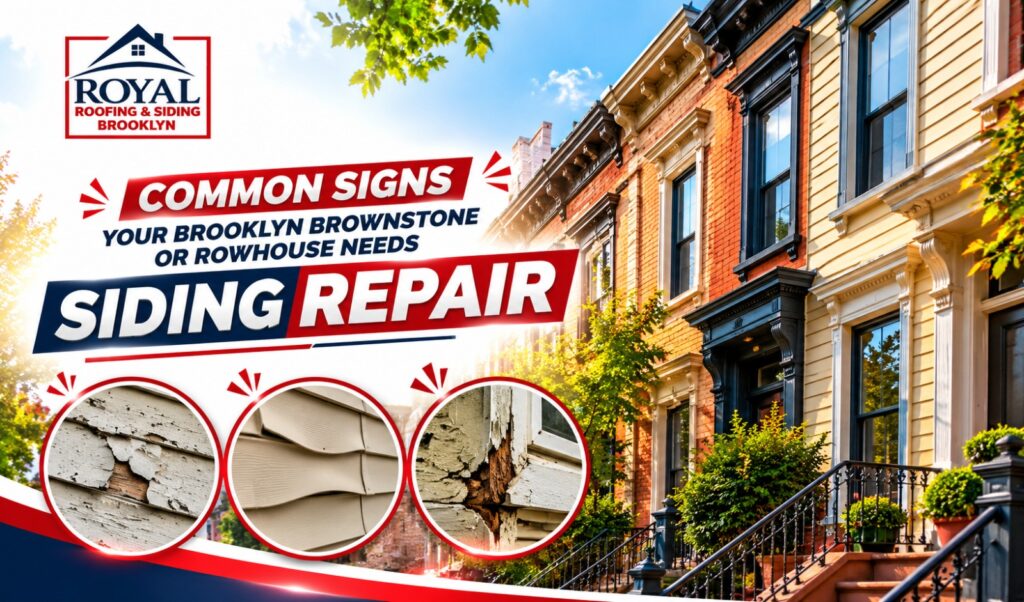
Siding repair Brooklyn brownstones often need is not always obvious from the sidewalk. Many Brooklyn homes have historic exterior details, older wall assemblies, mixed materials, and years of exposure to rain, wind, humidity, winter freezing, and summer heat. Over time, these conditions can weaken siding, trim, paint, joints, and protective exterior layers.
Brownstones and rowhouses across Brooklyn were built to last, but their exteriors need care. Some homes still have original wood elements, older masonry details, patched sections, or siding materials that were installed decades ago. Others have newer vinyl, fiber cement, or wood siding added during past renovations. Whether the property is historic or more recently updated, siding plays a major role in protecting the home from moisture intrusion and exterior deterioration.
When siding starts to crack, warp, rot, loosen, or pull away from the wall, water can move behind the surface. That can lead to mold growth, insulation damage, wall decay, peeling paint, and expensive structural repairs. Timely Siding Repair protects more than curb appeal. It helps preserve the safety, comfort, and value of the property.
For Brooklyn brownstones, rowhouses, and townhomes, early inspection is especially important because small exterior issues can spread behind walls before they become visible indoors.
What Qualifies as a Serious Siding Repair Issue? in Brooklyn
Not every siding concern is urgent, but every visible change deserves attention. A small surface crack, faded paint, or minor scuff may be mostly cosmetic. Serious siding damage is different because it affects the protective function of the exterior. Once siding can no longer keep moisture, wind, or pests out, the home becomes vulnerable.
Exterior siding repair Brooklyn homeowners need often begins with signs like loose panels, soft wood, bubbling paint, open joints, gaps around trim, or water stains near windows and doors. These issues can point to deeper moisture problems behind the siding. In Brooklyn’s older housing stock, that moisture may affect plaster, framing, masonry, and insulation.
The key is knowing when roof repair is enough and when damage has become widespread. A professional inspection can determine whether the problem is isolated or part of a larger exterior failure. Acting early can often prevent the need for full Siding Replacement later.
Minor Damage vs Urgent Siding Problems
Minor siding damage usually affects appearance more than protection. This may include slight fading, small surface scratches, or paint wear in areas that are still dry and stable. These issues should still be monitored, but they may not require immediate major work.
Urgent siding problems are different. Cracks that allow water entry, warped panels, rotting wood, loose siding, open seams, or soft exterior sections should be addressed quickly. If the siding moves when touched, feels spongy, or has staining around it, water may already be behind the surface.
Repair may be enough when the damage is localized. Replacement becomes more likely when large areas are deteriorated, moisture has spread, or the material is near the end of its life.
Risks of Ignoring Damaged Siding
Damaged siding can create hidden problems inside the wall system. Water may seep behind the exterior, soak insulation, and create damp conditions that support mold growth. In older brownstones and rowhouses, moisture can also affect wood framing, trim, plaster, and adjacent masonry.
Ignoring siding damage can increase long-term repair costs. A small repair around a window or wall section may turn into framing repair, insulation Roof replacement, repainting, and interior restoration if moisture spreads. Damaged siding can also reduce energy efficiency because gaps and cracks allow air movement.
For Brooklyn homeowners, the risk is not only visual. Poor siding performance can weaken the home’s exterior envelope and create problems that are harder to see until repairs become more expensive.
Visible Signs Your Brownstone or Rowhouse Siding Needs Repair in Brooklyn
The most useful siding warning signs are often visible before major interior damage occurs. Homeowners should pay attention to changes in shape, texture, color, surface condition, and how the siding sits against the home. Brownstone siding repair Brooklyn properties require can vary depending on whether the home has wood, vinyl, fiber cement, decorative trim, or a combination of exterior materials.
Damaged siding Brooklyn homes experience may start after years of weather exposure or after one strong storm. It may also come from poor past installation, old paint failure, trapped moisture, clogged drainage, or improper repairs. Since many Brooklyn homes sit close together, side walls and rear elevations may not get inspected as often as the front facade. These less visible areas are often where siding damage develops quietly.
A careful exterior check can reveal early problems. Look around windows, doors, roof edges, rear walls, trim boards, corners, and areas where siding meets masonry. These transitions are common weak points. If several warning signs appear together, it is time to schedule a professional Exterior Inspection.
Cracks, Warping, or Loose Siding Panels
Cracks, warping, and loose siding panels are some of the clearest signs that siding needs repair. Wood siding can split or cup when it absorbs moisture and dries repeatedly. Vinyl siding can warp from heat, poor fastening, or movement behind the panels. Fiber cement siding can crack if it was installed incorrectly or exposed to repeated impact.
Brooklyn’s seasonal expansion and contraction can make these problems worse. Materials expand during warm weather and contract during cold weather. If the siding does not have enough room to move, it may buckle, pull loose, or crack.
Loose panels should not be ignored because wind-driven rain can enter behind them. Once water gets behind the siding, the wall may stay damp long after the exterior looks dry. Professional repair may involve refastening panels, replacing damaged sections, sealing transitions, and checking for hidden moisture.
Peeling Paint, Bubbling, or Surface Deterioration
Peeling paint can seem like a simple maintenance issue, but it may be an early warning sign of moisture. When paint bubbles, blisters, flakes, or peels repeatedly in the same area, water may be pushing from behind the surface. This is especially common on older wood siding, trim, and decorative exterior features.
Surface deterioration can also show up as chalking, cracking, swelling, or rough patches. If the material underneath feels soft or uneven, the issue may go deeper than paint. Repainting without fixing the moisture source will usually lead to the same problem returning.
This is where Painting & Finishing should be connected to proper repair. A beautiful finish will not last if the siding beneath it is damaged. The exterior should be repaired, dried, sealed, and prepared correctly before paint or finish work begins.
Rotting Wood or Soft Spots on Exterior Walls
Rotting wood is a serious concern, especially in historic brownstones and older rowhouses. Wood siding, trim, window surrounds, cornices, and decorative features can absorb moisture over time. If the material feels soft, crumbles when touched, or shows dark staining, rot may already be active.
Rot is not only a surface issue. It can spread into nearby framing or allow pests and moisture deeper into the wall. On historic homes, rotted exterior details can also affect architectural character if repairs are delayed too long.
Professional Wood Siding Repair may involve removing damaged sections, treating surrounding areas, replacing wood with matching materials, and improving drainage or sealing details. For historic brownstone siding repair, matching the look and profile of existing materials is important so the emergency roof repair protects both structure and appearance.
Weather-Related Siding Damage in Brooklyn Properties
Brooklyn weather can be hard on siding because homes face rain, wind, humidity, snow, ice, and temperature swings throughout the year. Older brownstone roofing and rowhouses may also have exterior details that trap water if they are not maintained properly. Even newer siding materials can fail early when storms expose weak installation points or old wall problems.
Residential siding contractors Brooklyn homeowners hire often find damage around corners, roof edges, rear walls, and window trim after heavy storms. Water can enter through small gaps, then remain hidden behind the siding. Wind can loosen panels or force rain behind exterior layers. Winter weather roof repair freezing can widen cracks and stress already weakened materials.
Siding repair Brooklyn homes need after seasonal damage should be handled early. Waiting until spring or after repeated storms can allow moisture to spread. A home’s siding is part of its first line of defense, so weather-related damage should be treated as both a cosmetic and protective issue.
Rain, Wind, and Storm Exposure
Rain and wind can expose siding weaknesses quickly. During a heavy Brooklyn storm, water may be pushed behind loose panels, open seams, cracked trim, or gaps around windows. If the siding was already weakened, a single storm can turn a small issue into a leak risk.
Wind can also loosen vinyl panels, lift trim pieces, or pull fasteners from aging wood. Once siding is no longer tight to the wall, it becomes easier for future storms to cause more damage. Rear elevations and upper floors are especially vulnerable because homeowners may not inspect them often.
Storm-related siding repair may involve replacing damaged sections, sealing vulnerable joints, checking the wall behind the siding, and correcting drainage problems that keep water against the exterior.
Freeze-Thaw Cycles and Seasonal Expansion
Freeze-thaw cycles are a major cause of siding damage in Brooklyn. Water can enter small cracks during the day, then freeze overnight when temperatures drop. As the water freezes, it expands and puts pressure on the siding, trim, and joints.
This repeated movement can cause cracking, separation, paint failure, and material fatigue. Wood can swell and shrink. Vinyl can become brittle in cold weather. Fiber cement can crack if water enters unsealed edges. Older exterior materials are especially sensitive because they may already have small weaknesses.
Seasonal expansion also affects how siding panels fit together. Poor installation or old fasteners can prevent the material from moving naturally. Over time, this can lead to buckling, gaps, and loose sections that require repair.
Siding Repair Needs for Brownstones vs Rowhouses in Brooklyn
Brooklyn brownstones and rowhouses often get discussed together, but their siding repair needs can be different. Brownstones may have more historic exterior details, masonry features, wood trim, decorative cornices, and preservation concerns. Rowhouses may have attached walls, shared exterior lines, and coordinated drainage or water movement issues.
Rowhouse siding repair Brooklyn homeowners need may involve side or rear elevations where moisture collects between connected homes. Historic brownstone siding repair may require careful matching of materials, finishes, profiles, and architectural style. In both cases, the contractor must understand how older buildings handle water.
A modern repair approach should not ignore the original structure. If siding is replaced without addressing moisture, masonry cracks, gutter overflow, or failing trim, the same damage can return. This is why exterior work on Brooklyn homes often overlaps with Brownstone Restoration, Masonry Repair, and Water Damage Repair.
Historic Brooklyn Brownstones
Historic Brooklyn brownstones require a careful repair approach. Their exterior details may include stone, brick, wood trim, decorative molding, cornices, and older wall materials. Siding repair must protect these features while stopping water intrusion.
Matching materials and finishes matters. A repair that looks out of place can hurt curb appeal and may not perform well if the wrong product is used. For example, replacing a damaged wood detail with a poor match can create gaps, uneven movement, or moisture problems around the repair.
Preserving architectural integrity does not mean ignoring modern protection. The goal is to repair damaged areas, improve water resistance, and maintain the historic look of the property. A contractor with brownstone experience can balance preservation and performance.
Attached Rowhouse Properties
Attached rowhouses create special siding concerns because one home is connected closely to the next. Water movement may not stop at the property line. If siding, gutters, flashing, or trim fails near a shared area, moisture may travel along connected walls or into hidden spaces.
Coordinated exterior repairs may be needed when damage affects shared edges, rear walls, or roof drainage points. Even when only one homeowner is responsible for a repair, the contractor should understand how the connected structure influences water flow.
Rowhouses also have areas that are difficult to access, especially side walls or upper rear sections. These hidden areas should not be ignored. Regular inspection helps identify damage before it spreads behind the exterior.
When Siding Repair Turns Into Full Replacement in Brooklyn
Siding repair is often the right choice when damage is isolated and the rest of the exterior is in good condition. But there are times when repair becomes a temporary fix rather than a long-term solution. If siding is old, failing in several places, or allowing repeated moisture intrusion, full replacement may be more practical.
Siding replacement Brooklyn homeowners usually come after recurring repairs, widespread rot, severe storm damage, poor insulation performance, or major exterior deterioration. Replacement can also make sense when the current siding no longer protects the home properly or no longer matches the owner’s goals for curb appeal and energy efficiency.
Exterior siding repair Brooklyn contractors should explain both options clearly. The best decision depends on the extent of damage, the siding material, the age of the system, hidden moisture, and the cost of repeated repairs. A homeowner should not be pushed into replacement too quickly, but they also should not keep paying for short-term repairs on a failing exterior.
Repair vs Replacement Decision Factors in Brooklyn
The table below shows common decision factors for Brooklyn brownstones and rowhouses.
| Siding Condition | Repair May Be Enough | Replacement May Be Better |
| Small crack or loose panel | Yes, if damage is isolated | No, unless damage is widespread |
| Peeling paint | Yes, if siding is dry and stable | Yes, if paint failure is caused by deep moisture |
| Localized wood rot | Yes, if surrounding material is sound | Yes, if rot has spread across multiple sections |
| Storm-damaged panels | Yes, if limited to one area | Yes, if panels are loose across the exterior |
| Repeated water intrusion | Maybe, after moisture source is fixed | Often, if siding and wall layers are compromised |
| Old, brittle siding | Sometimes, for small repairs | Yes, if repairs no longer hold |
Repair is usually best when the siding still performs well overall. Replacement is often better when the exterior has reached the point where patching only delays bigger problems.
Benefits of Full Siding Replacement
Full siding replacement can improve both protection and appearance. New siding can help reduce air leakage, improve insulation performance, and give the home a cleaner exterior finish. It can also increase property value by improving curb appeal and reducing visible deterioration.
Replacement also gives contractors a chance to inspect the wall beneath the old siding. Hidden moisture, damaged sheathing, old insulation, and weak framing can be addressed before the new system is installed. This is important for older Brooklyn homes where exterior problems may have been covered for years.
Material choice matters. Vinyl Siding Repair may be enough for isolated panel damage, while full replacement with Fiber Cement Siding or high-quality residential siding may be a better fit for long-term durability.
Choosing the Right Siding Repair Contractor in Brooklyn
Choosing the right contractor is one of the most important parts of protecting a brownstone or rowhouse exterior. Brooklyn homes often have unique siding conditions because of age, construction style, attached walls, and historic details. A contractor who only understands newer homes may miss important signs of hidden moisture or structural wear.
Residential siding contractors Brooklyn property owners trust should be licensed, insured, and experienced with local building types. They should be able to inspect the exterior carefully, explain the cause of the damage, and recommend repair or replacement based on evidence.
Siding repair Brooklyn homeowners need should never be treated as a quick cover-up. The contractor should look at drainage, trim, flashing, paint failure, wall condition, and nearby masonry. A repair that only replaces the visible damaged section may fail again if the moisture source remains.
What to Look for in a Local Siding Specialist
A strong local siding specialist should bring practical experience, clear communication, and proper repair methods. Before hiring, look for these qualities:
- Experience with Brooklyn brownstones, rowhouses, townhomes, and older residential exteriors.
- Proper licensing, insurance, and a clear written scope of work.
- Knowledge of wood, vinyl, fiber cement, trim, flashing, and moisture control.
- Ability to explain whether repair or replacement is the better long-term choice.
- Commitment to quality materials, clean workmanship, and respectful property protection.
The right contractor should inspect before recommending. A serious siding issue cannot be fully judged from one photo or a quick glance from the street.
Importance of Local Brooklyn Experience
Local Brooklyn experience matters because siding problems are shaped by the borough’s building styles and weather patterns. Brownstones, rowhouses, and attached residential properties often have exterior details that require careful repair planning.
A local contractor understands how Brooklyn homes handle water, where siding commonly fails, and how old trim, masonry, gutters, and wall systems work together. They also understand preservation concerns and neighborhood expectations for exterior appearance.
Compliance matters as well. Some historic or visually sensitive properties may require repairs that respect existing design. A contractor familiar with Brooklyn homes can help complete repairs that protect the building without damaging its character.
Why Timely Siding Repair Matters for Brooklyn Homes
Timely siding repair protects Brooklyn homes from damage that often starts small but spreads quickly. A cracked panel, loose trim board, peeling paint area, or soft wood section may not seem urgent at first. But when water gets behind siding, it can affect insulation, framing, plaster, masonry, and interior finishes.
Damaged siding Brooklyn homes experience can also reduce energy efficiency. Gaps and cracks allow drafts, moisture, and heat transfer. Over time, the home may feel less comfortable and require more heating or cooling.
Repairing siding early saves money because the work is usually smaller and less invasive. It also protects curb appeal, which is especially important for brownstones and rowhouses where exterior character adds value. A well-maintained exterior shows that the property is cared for and helps prevent larger repairs later.
For homeowners planning broader Exterior Remodeling, siding repair is often a smart first step. It protects the structure before cosmetic improvements are made.
Conclusion: Don’t Ignore the Warning Signs — Protect Your Brooklyn Property
Siding problems on Brooklyn brownstones and rowhouses should never be ignored. Cracked panels, peeling paint, rotting wood, loose siding, bubbling surfaces, storm damage, and soft exterior spots can all point to deeper moisture concerns. When repairs are delayed, water can move behind the siding and damage the home’s structure, insulation, plaster, and appearance.
Early inspection gives homeowners a clearer path forward. Some issues can be repaired with targeted work. Others may require larger exterior improvements or full replacement. The key is finding the problem before it spreads.
For trusted local help, contact Royal Roofing & Siding Brooklyn at 718-536-2667. Visit the team at 108 Emerson Pl Suite 212, Brooklyn, NY 11205, United States
for expert siding inspections, brownstone exterior repairs, rowhouse siding solutions, and replacement guidance.
FAQs – Siding Repair for Brooklyn Brownstones & Rowhouses
How do I know if my Brooklyn brownstone needs siding repair?
Your Brooklyn brownstone may need siding repair if you notice cracks, warping, loose panels, peeling paint, bubbling surfaces, rotting wood, soft exterior spots, or moisture stains near walls and windows. Interior signs like musty odors, damp plaster, or water stains can also point to exterior siding damage. A professional inspection can confirm whether the issue is minor, moisture-related, or part of a larger exterior repair need.
Is siding repair different for historic brownstones?
Yes, siding repair for historic brownstones is often different because the work must protect both the structure and the architectural character of the home. Historic brownstones may include older wood details, masonry features, decorative trim, and unique finishes that require careful material matching. Repairs should address moisture problems while preserving the original look as much as possible. Local experience with Brooklyn brownstones is important for this type of work.
Can damaged siding cause water leaks inside my home?
Yes, damaged siding can allow water to move behind the exterior and eventually reach interior walls, ceilings, insulation, or framing. Cracks, gaps, loose panels, failed trim, and rotted wood can all create paths for moisture. In older Brooklyn homes, water may travel through wall cavities before visible stains appear. Repairing damaged siding early helps prevent hidden leaks, mold growth, plaster damage, and costly structural repairs.
Should I repair or replace siding on a rowhouse?
You should repair rowhouse siding when the damage is localized and the rest of the exterior is still in good condition. Replacement may be better if the siding is old, brittle, repeatedly leaking, badly warped, or damaged across multiple areas. Because rowhouses often share walls and exterior lines with neighboring properties, a professional inspection is important before deciding. The right choice depends on damage extent, material age, moisture issues, and long-term cost.
How often should siding be inspected in Brooklyn properties?
Siding on Brooklyn brownstones and rowhouses should generally be inspected at least once a year and after major storms. Older homes, historic exteriors, wood siding, and properties with previous water damage may need closer attention. Regular inspections help identify cracks, loose panels, paint failure, rot, and moisture intrusion before they become expensive repairs. Spring and fall are good times to check siding condition and prepare for seasonal weather.